Get In The Box Studios / Project Lead & Technical Designer / 2023

Deckweaver.

Deckweaver: Descent Into Chaos was my graduate-school final project at UCF FIEA. We built the game in Unreal Engine 5 and released it on Steam in August 2023. I served as project lead and technical designer, with hands-on work across controller support, combat, boss design, VFX, UI, and production.

Role
Project Lead & Technical Designer
Team
18 people
Engine
Unreal Engine 5

Selected work

What I worked on

My work ranged from controller feel and combat systems to project leadership and shipped UI.

Official trailer / Get In The Box Studios Steam

01 / Shipped team project

The game

Deckweaver is a first-person deckbuilding action roguelike that our graduate team released on Steam.

Players build a spell deck, collect artifacts that change how a run plays, and fight through corrupted environments on the way to Chaos.

Project details

  • Developed from November 2022 through August 2023
  • Released for PC on Steam on August 18, 2023
  • Unreal Engine 5
  • PC
  • Steam
  • Action Roguelike
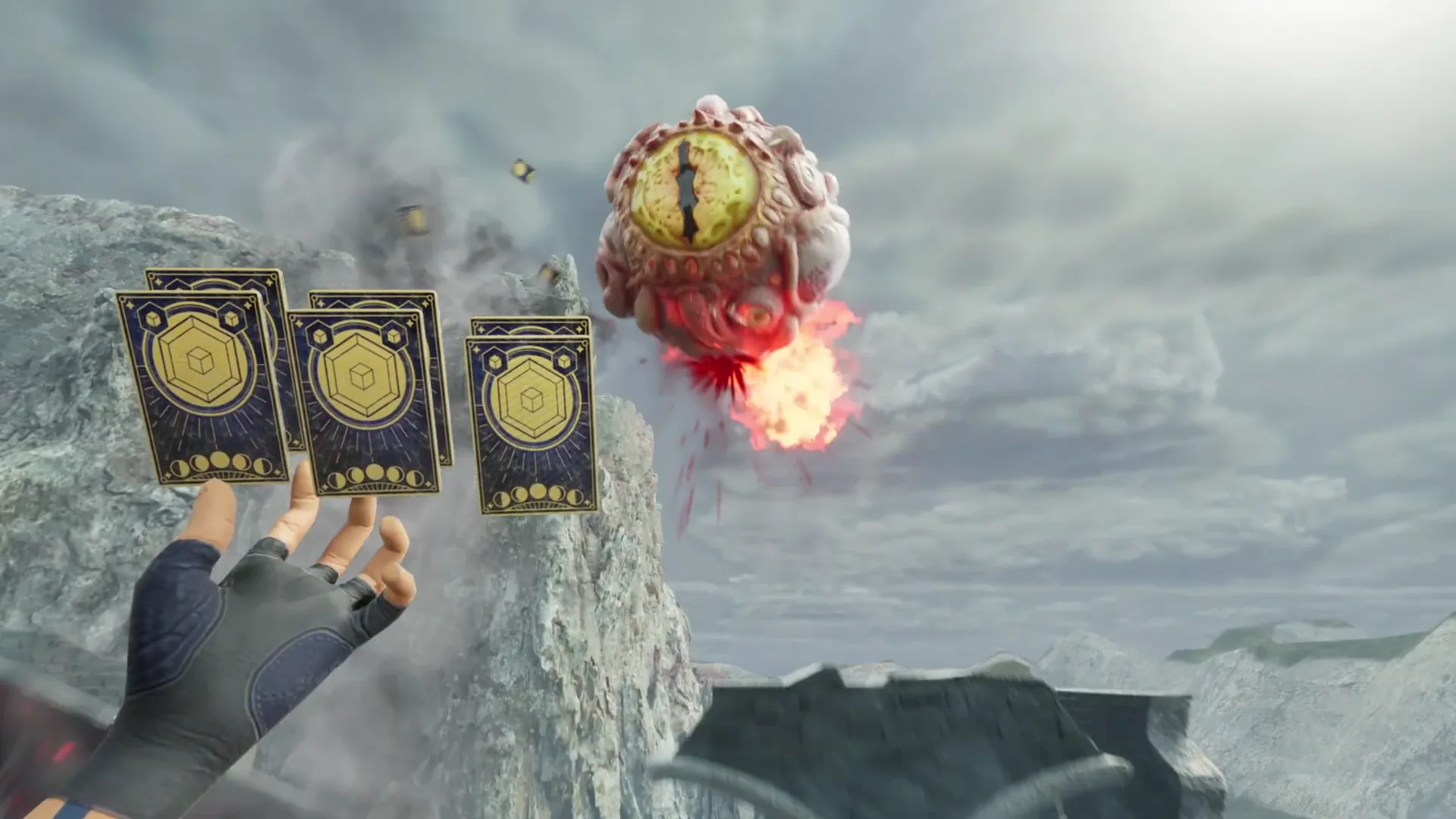
Deckweaver first-person combat with cards visible in the player's hand

02 / C++ gameplay systems

Controller support

I built the game’s controller support in C++, including aim assist and sensitivity that changes with stick position.

The sensitivity curve kept small stick movements precise while allowing faster turns near the edge of the stick’s range. I paired the curve with aim assist and tuned both together for controller input.

Areas of contribution

  • Implemented controller input in C++
  • Built aim-assist behavior
  • Added dynamic sensitivity based on stick position
  • Tuned the response for fine aim and fast turns
  • C++
  • Controller Input
  • Aim Assist
  • Gameplay Tuning
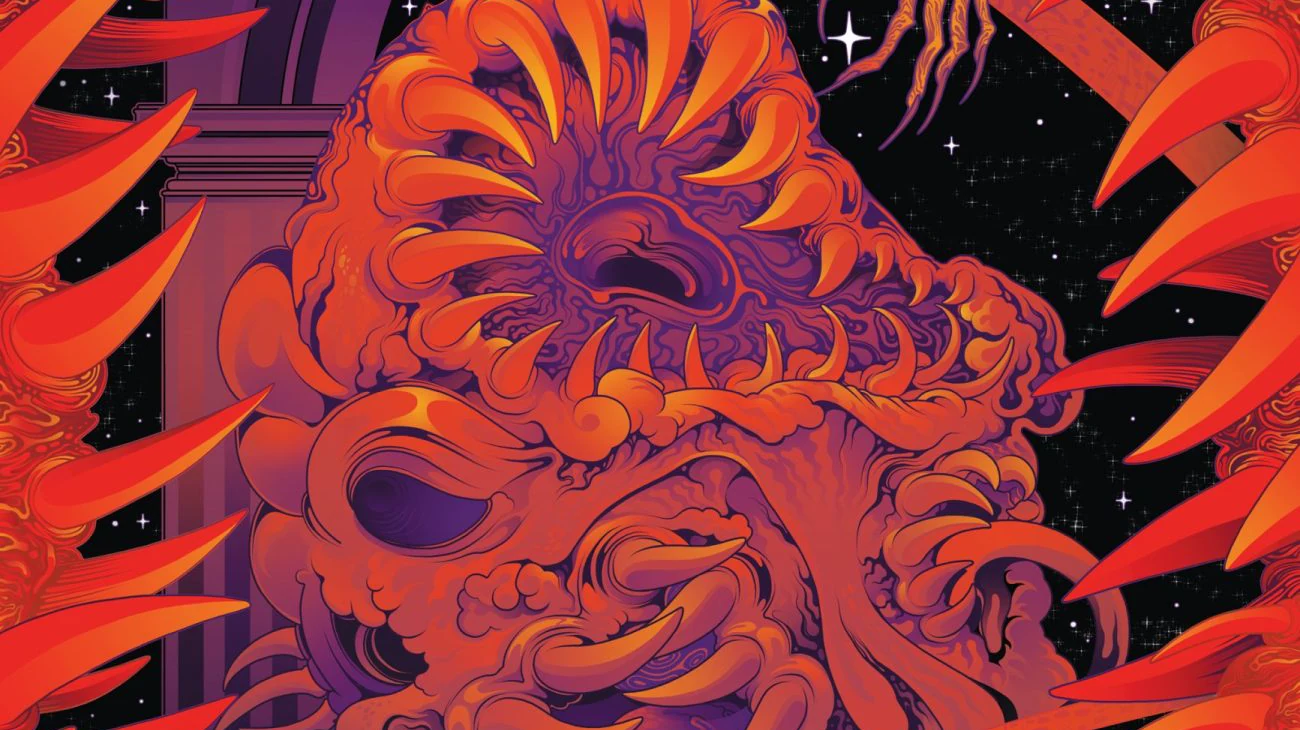
Illustrated capstone poster art showing Chaos, the final boss in Deckweaver
Capstone poster / Chaos, the final boss
Ring of fire / shrinking the safe area
Acid ball attack

03 / Combat design

Combat & final boss

I designed and built a three-stage final boss in Unreal Engine using Blueprints and behavior trees.

The encounter was built around controlling where the player could safely stand. Staying near the arena’s outer edge triggered a mound of flesh that punched the player back toward the center, closer to the boss and the enemies already crowding the arena. The boss then used several attacks to take away more space and keep the player moving.

Boss attacks

  • Tentacles erupted from the ground and struck at the player.
  • A ring of fire formed around the player and narrowed the available fighting space.
  • Spires rose from the ground before the arena floor turned to poisonous acid, forcing the player to jump onto one to survive.
  • The boss launched acid mortars from its mouth that burst into acid clouds when they hit the ground.
  • Combat Design
  • Boss Design
  • Blueprints
  • Behavior Trees
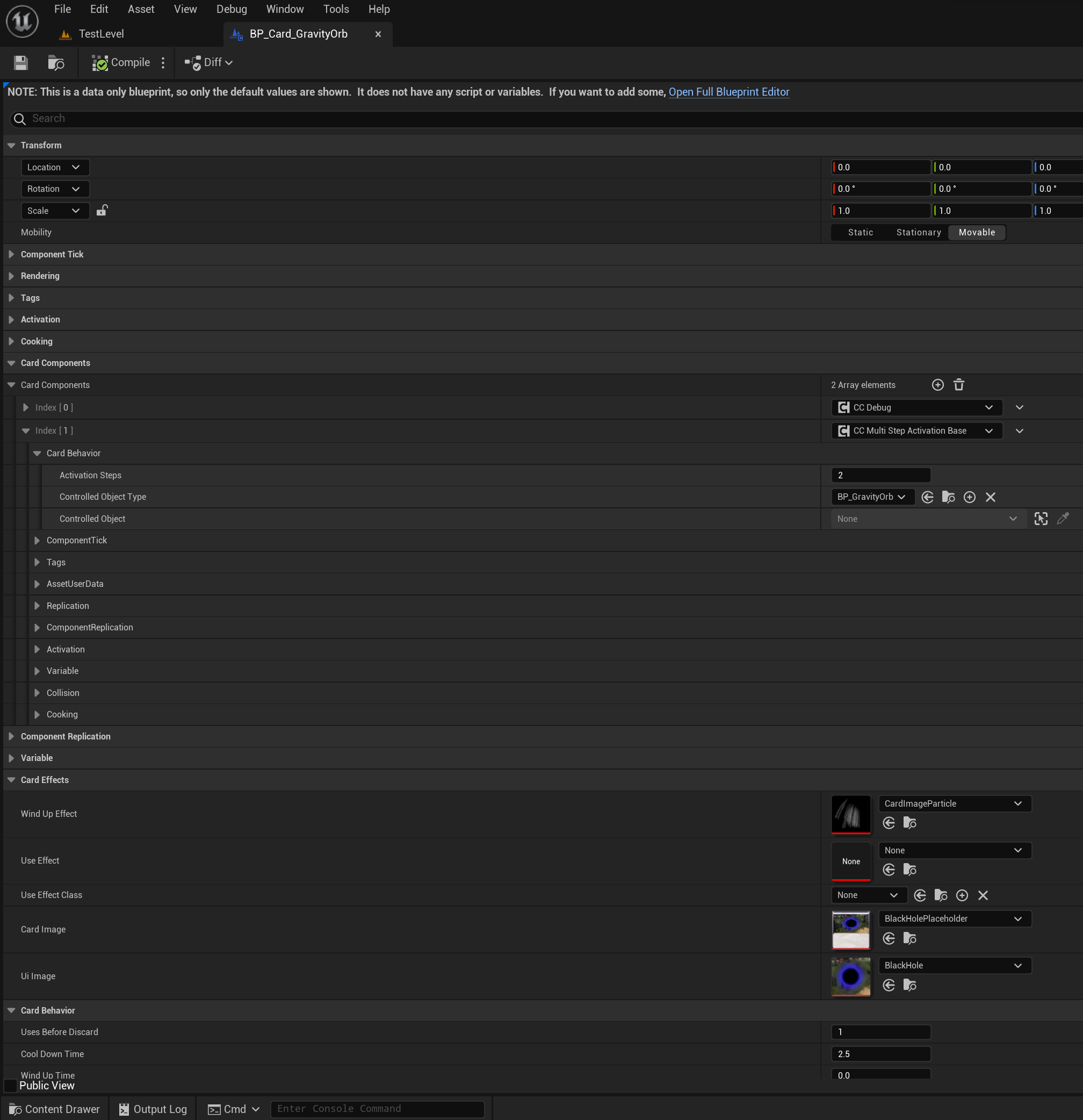
Unreal Engine data-only card Blueprint showing an array of reusable card components and configurable card settings
Card Blueprint / reusable components and per-card settings
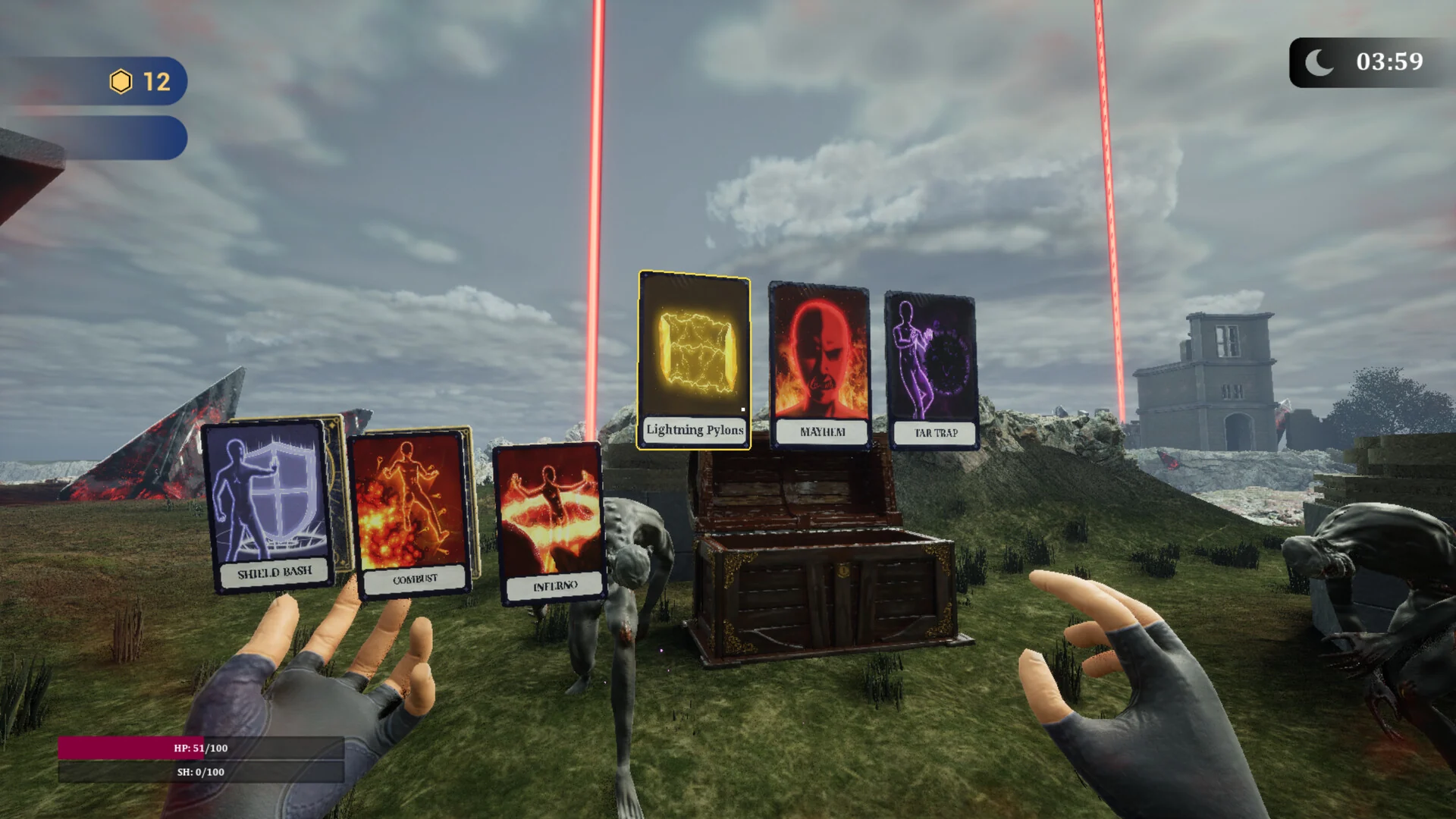
Deckweaver showing three active cards and three new cards available from a chest
Cards available from a chest
Black hole card / enemy attraction
Black hole card / movement use

04 / Game context

Card system

Deckweaver built its cards from reusable components instead of treating every card as a separate implementation.

We created modular behaviors, and combined and configured those components inside data-only card Blueprints. A card Blueprint could hold several components along with its activation steps, cooldown, effects, and artwork. We focused on reusable functionality so we can design and tune card variations without needing new code for every card.

What the pipeline enabled

A designer could take the pieces behind an area explosion that set enemies on fire and recombine them into a card that froze enemies in an area. The same component library supported both cards; the designer changed the combination and settings.

Black hole example

More specialized ideas still called for custom components. The black hole card was built to pull enemies toward it, but testing revealed that the same force could move the player. That gave the card a second use as a traversal tool.

How the decks worked

  • Players built three separate decks and held one active card from each deck.
  • Using a card put that hand slot on cooldown and drew the next card from the same deck.
  • Players could organize decks by card type or play style so each hand slot became familiar through repeated use.
  • Cards that worked together needed to sit in different decks if the player wanted both available at once.

Changing a deck during a run

  • Vendors and chests let players acquire new cards.
  • They could also transform or remove cards and move cards between decks.
  • Game Context
  • Modular Systems
  • Data-Only Blueprints
  • Deckbuilding
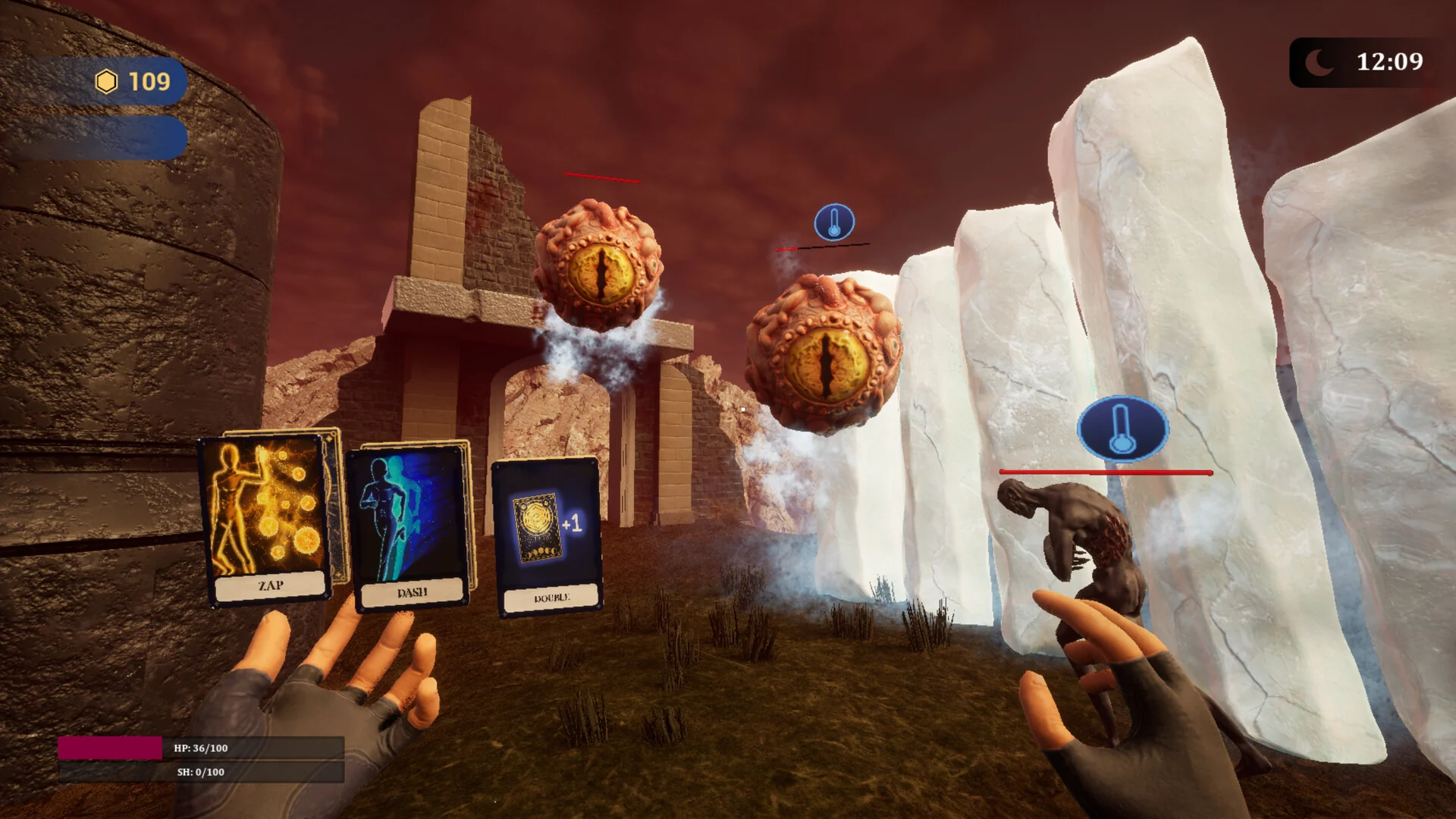
Deckweaver enemies displaying a frozen status effect during combat

05 / Additional implementation

VFX & UI implementation

I built the enemy status-effect VFX and implemented the game’s settings menu and loading screens.

The status effects needed to stay readable during combat, when players were managing cards and fighting multiple enemies. The settings menu and loading screens were part of the final PC release.

  • VFX
  • UI Implementation
Deckweaver: Descent Into Chaos title card

06 / Project leadership

Team process

As project lead, I had to keep an 18-person team coordinated without letting meetings consume the time we needed to build the game.

I changed the design team’s meeting structure and cut meeting time by 60%, returning roughly eight development hours per designer each week.

  • Project Leadership
  • Production
  • Team Process